Winter creates a demanding environment for commercial concrete floors.
Snow, moisture, deicing materials, dirt, and debris can be tracked through entrances throughout the day. Loading areas may be exposed to changing temperatures and exterior conditions. Existing cracks, joints, surface wear, and other weaknesses can become more noticeable as facilities deal with winter operations.
For businesses in the Chicago area, these aren’t abstract concerns. Winter conditions can create months of additional challenges for entrances, warehouses, parking structures, service areas, manufacturing spaces, and other concrete surfaces.
The good news is that facility owners don’t have to wait until a floor is badly deteriorated before taking action.
At Broadleaf, we believe protecting concrete starts with understanding the environment, identifying existing problems, and choosing a flooring or protective system that fits how the space is actually used.
Why Winter Creates Extra Challenges for Concrete Floors
Commercial floors are already expected to handle substantial traffic and wear.
Winter can add another layer.
Employees, customers, vehicles, forklifts, carts, and equipment may carry moisture, slush, dirt, and deicing residue into a building. Areas close to exterior doors can experience repeated exposure throughout the day.
In parking garages, loading areas, and other partially exposed environments, concrete may face even more direct contact with winter conditions.
That makes seasonal floor maintenance particularly important.
If the concrete is already deteriorating, winter traffic and moisture can make existing problems harder to ignore. Broadleaf’s guide to signs your commercial concrete floor needs restoration or resurfacing can help facility managers recognize common warning signs.
Moisture Is One of the Biggest Concerns
Moisture and concrete require careful consideration during any flooring project.
In winter, water may be carried indoors on tires, boots, equipment, and carts. Snow can melt and leave wet areas around entrances, loading zones, and parking facilities.
But surface moisture isn’t the only consideration.
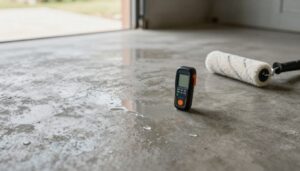
Moisture within a concrete slab can also affect flooring system selection and installation. That’s why proper evaluation and testing matter before applying coatings.
Broadleaf has covered the differences between calcium chloride and relative humidity moisture testing as well as considerations involved in preparing damp concrete for epoxy coating.
The broader lesson applies to commercial facilities too: moisture conditions should be understood rather than guessed.
Deicing Materials and Tracked-In Debris Add to the Workload
Winter doesn’t arrive inside a commercial building as clean water.
Slush can carry road residue, dirt, grit, and deicing materials onto the floor. Once inside, that mixture can be spread across high-traffic areas by shoes, carts, and equipment.
That creates both maintenance and flooring-performance considerations.
Regular cleaning can help remove accumulated contaminants, but facility managers should also consider whether the existing flooring system is appropriate for the environment.
High-traffic commercial spaces may require a flooring system selected specifically for durability and ease of maintenance.
Broadleaf’s guide to commercial flooring for high-traffic areas explores several of the factors involved.
Pay Attention to Cracks and Concrete Joints
A winter floor-protection strategy shouldn’t focus only on the visible surface.
Joints and cracks deserve attention too.
Concrete naturally incorporates joints to accommodate movement and control where cracking occurs. Depending on the facility, those joints may experience traffic from wheels, carts, forklifts, and other equipment.
Damaged or deteriorated joints can become maintenance concerns and may affect how smoothly traffic moves across the floor.
Broadleaf provides professional joint caulking as part of its concrete flooring services.
If you notice deterioration around joints, cracks that appear to be worsening, or damaged areas exposed to constant traffic, those conditions should be evaluated rather than simply covered over.
Protective Flooring Systems Can Help
Commercial concrete doesn’t always have to remain bare.
Depending on the application, several flooring and finishing systems can be considered.
Sealed concrete flooring can be appropriate for certain environments where the goal is to protect and finish the existing concrete.
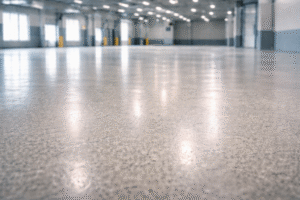
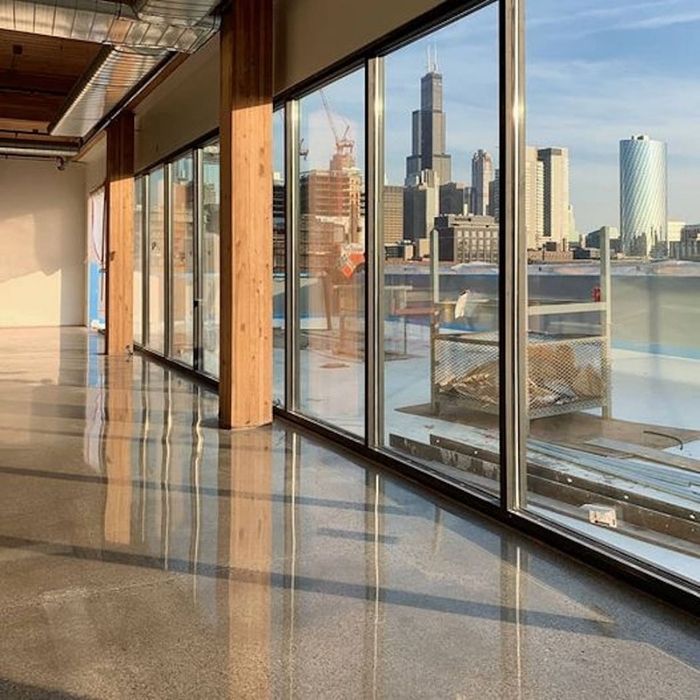
Polished concrete flooring provides another approach, mechanically refining the concrete to create a durable finished surface.
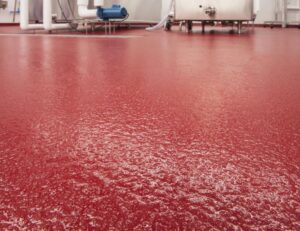
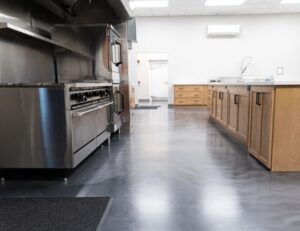
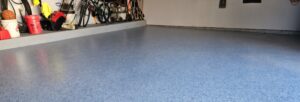
Commercial and industrial facilities may also consider epoxy and other coating systems where additional performance characteristics are needed.
The correct choice depends on traffic, chemicals, moisture, cleaning, aesthetics, slip-resistance requirements, and the condition of the slab.
Broadleaf’s commercial and industrial flooring services encompass multiple systems because different environments require different solutions.
Entrances, Parking Garages, and Service Areas Need Special Attention
Winter wear isn’t distributed evenly throughout a building.
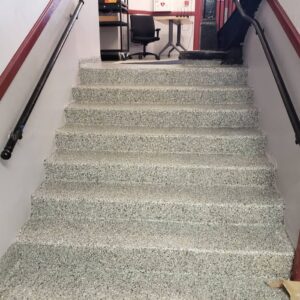
Areas closest to the outdoors often experience the most direct exposure.
Parking Garages
Parking structures encounter vehicle traffic along with moisture and contaminants brought in from roadways.
Flooring in these environments needs to be evaluated according to those operating conditions. Broadleaf provides specialized parking garage flooring solutions for these demanding spaces.
Service and High-Traffic Areas
Commercial service spaces can also experience frequent traffic, spills, equipment movement, and winter contaminants.
Broadleaf offers dedicated service area flooring for facilities where durability and performance are priorities.
Rather than treating an entire building identically, facility managers should identify which areas experience the greatest exposure and choose systems accordingly.
Don’t Wait Until Winter Damage Becomes a Bigger Project
One of the most effective ways to protect a commercial floor is to identify problems early.
Small cracks, worn surfaces, damaged joints, coating failure, and other signs of deterioration may be easier to address before they spread across larger areas.
Routine inspection is especially useful during winter.
Watch high-traffic entrances, loading areas, equipment paths, parking areas, and any location where water repeatedly collects. Note changes in the surface rather than assuming every defect is merely cosmetic.
If the floor has already deteriorated substantially, concrete overlay flooring may be one option worth discussing depending on the condition and intended use of the surface.
The goal should be to address the underlying condition rather than simply make a worn floor look better temporarily.
Prepare Your Commercial Floors for Winter Conditions
Winter floor protection begins before a major problem develops.
Establish consistent cleaning procedures. Pay attention to areas where moisture and debris accumulate. Inspect cracks and joints. Monitor existing coatings for signs of wear or failure.
Most importantly, make sure the flooring system matches the demands of the facility.
Broadleaf provides flooring solutions for commercial and industrial environments throughout its service areas, including commercial floor coatings in Chicago.
If you’re concerned about the condition of your concrete before or during winter, contact Broadleaf to discuss the space, current floor condition, and available flooring solutions.
Key Takeaways
- Winter can increase the amount of moisture, dirt, slush, and deicing residue tracked onto commercial floors.
- High-traffic entrances and other exterior-adjacent areas deserve extra attention.
- Moisture conditions should be evaluated before installing a concrete coating system.
- Cracks and joints should be inspected rather than simply covered.
- Sealed concrete, polished concrete, epoxy, and other systems serve different commercial applications.
- Parking garages and service areas may have flooring requirements different from interior office spaces.
- Routine inspection can help identify deterioration before it becomes more extensive.
- The best protection strategy starts with matching the flooring system to the facility’s actual operating conditions.