When selecting a high-performance flooring system for a commercial or industrial facility, two of the most common options are epoxy flooring and urethane cement flooring. Both offer durability, chemical resistance, and long-term value—but they’re not interchangeable.
The right choice depends on your environment, operational demands, moisture conditions, and long-term maintenance goals.
Here’s a clear breakdown to help you determine which system best fits your facility.
What Is Epoxy Flooring?
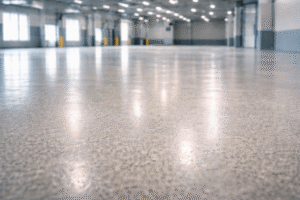
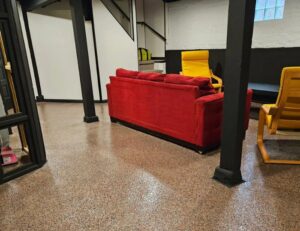
Epoxy flooring is a resin-based coating system applied over properly prepared concrete. Once cured, it creates a hard, seamless, and highly durable surface.
Epoxy systems are commonly used in:
-
Warehouses
-
Manufacturing facilities
-
Retail spaces
-
Parking garages
-
Residential garages
Broadleaf offers epoxy and other solutions within its commercial and industrial flooring services.
Key Benefits of Epoxy Flooring
-
Strong adhesion to properly prepared concrete
-
Excellent abrasion resistance
-
Customizable colors and finishes
-
Cost-effective for large areas
-
Seamless, easy-to-clean surface
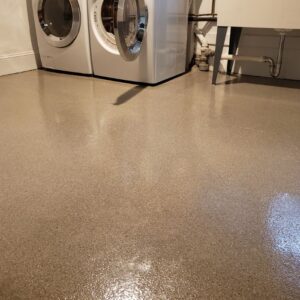
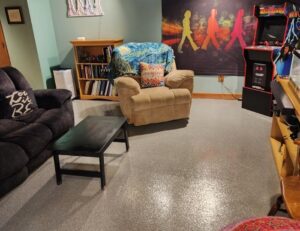
Epoxy is also popular in residential applications like garage flooring solutions and basement flooring systems.
What Is Urethane Cement Flooring?
Urethane cement (also called polyurethane cement) is a heavy-duty, cementitious flooring system designed for extreme environments.
Unlike standard epoxy, urethane cement systems are thicker, more flexible, and highly resistant to thermal shock and moisture vapor transmission.
Broadleaf’s urethane cement flooring systems are commonly installed in:
-
Food and beverage processing facilities
-
Commercial kitchens
-
Breweries
-
Healthcare facilities
-
Manufacturing plants with wash-down requirements
Key Benefits of Urethane Cement
-
Exceptional resistance to thermal shock
-
Superior moisture tolerance
-
High impact resistance
-
Strong chemical resistance
-
Long-term performance in wet environments
Performance Comparison: Epoxy vs. Urethane Cement
1. Moisture Tolerance
If your facility has elevated moisture vapor emissions or damp concrete, urethane cement typically performs better.
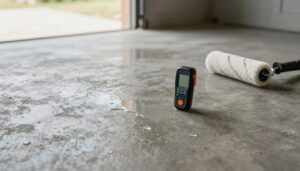
Moisture testing is critical before choosing a system. If you’re evaluating concrete conditions, review Calcium Chloride vs. RH Moisture Tests for Concrete Floors to understand how results impact flooring decisions.
Epoxy systems can fail if moisture issues aren’t properly addressed.
2. Temperature & Thermal Shock
Facilities exposed to steam cleaning, hot water, or temperature swings require a flooring system that can expand and contract without cracking.
Urethane cement outperforms epoxy in:
-
Commercial kitchens
-
Food service operations
-
Cold storage areas
For environments like restaurant and food service flooring, urethane cement is often the preferred solution.
3. Impact & Heavy Traffic Resistance
Both systems handle heavy traffic well, but urethane cement offers superior impact resistance under extreme industrial use.
Facilities such as manufacturing flooring environments often benefit from the added durability.
4. Installation & Cure Time
Epoxy typically offers:
-
Faster installation
-
Lower upfront cost
-
Smooth decorative finishes
Urethane cement may require:
-
More intensive installation
-
Higher upfront investment
-
Specialized application expertise
Working with experienced professionals through Broadleaf’s flooring services ensures proper substrate preparation and system selection.
Cost Considerations
Epoxy is generally more budget-friendly upfront. Urethane cement typically costs more due to its thickness, material composition, and performance benefits.
However, the true cost comparison should consider:
-
Downtime risk
-
Maintenance frequency
-
Long-term durability
-
Environmental conditions
Choosing the wrong system can lead to premature failure, which is significantly more expensive than selecting the correct one initially.
When to Choose Epoxy Flooring
Epoxy may be the right choice if your facility:
-
Has stable temperature conditions
-
Has low to moderate moisture levels
-
Requires decorative or branded finishes
-
Needs a cost-effective large-area solution
-
Operates in offices, retail, or light industrial settings
Epoxy also works well in spaces like parking garage flooring when properly specified.
When to Choose Urethane Cement Flooring
Urethane cement is typically the better choice if your facility:
-
Experiences heavy wash-downs
-
Has high moisture vapor emissions
-
Faces thermal shock from hot water or steam
-
Requires extreme chemical resistance
-
Operates in food processing or healthcare settings
Facilities such as healthcare facility flooring environments benefit from its durability and sanitation advantages.
The Importance of Proper Substrate Preparation
Regardless of which system you choose, success depends on preparation.
This may include:
-
Moisture testing
-
Surface profiling
-
Joint repair
-
Crack remediation
Improper preparation is one of the leading causes of coating failure. Professional evaluation is critical before installation begins.
Making the Right Decision for Your Facility
There is no universal “best” system—only the best system for your environment.
The right choice depends on:
-
Operational demands
-
Moisture conditions
-
Cleaning methods
-
Budget constraints
-
Long-term performance expectations
If you’re unsure which solution fits your facility, consulting with experienced professionals at Broadleaf can help you avoid costly mistakes.
You can also explore completed projects in the gallery or request a consultation through the contact page.
TL;DR – Key Takeaways
-
Epoxy flooring is cost-effective, durable, and ideal for many commercial environments with stable conditions.
-
Urethane cement excels in high-moisture, high-temperature, and heavy industrial settings.
-
Moisture testing and surface prep are critical before installation.
-
Upfront cost should be weighed against long-term durability and performance.
-
Choosing the right flooring system protects your investment and reduces downtime risk.
Selecting between epoxy and urethane cement isn’t about which is better overall—it’s about which is better for your facility’s specific demands.